traverse curtain rod problems

WINDOW draperies that are opened and closed frequently are usually hung on traverse rods so that they can be easily adjusted by pulling down on the looped control cord that hangs down at one end of the rod. Occasionally, however, traverse rods will get out of adjustment so that the draperies no longer open evenly on both sides, or they will not meet in the center when fully closed. Or the slides may tend to jam when in the partly open or partly closed position so that opening and closing the draperies becomes difficult or awkward. Fortunately, most of these problems are relatively easy to correct, involving only some adjustment of the slides or realignment and untangling of the control cord. To be able to take the necessary steps, however, the homeowner must be reasonably familiar with how a conventional traverse rod operates. Most are similar to the one shown here. They are usually referred to as two-way traverse rods in that they have two control slides that pull the draperies open or closed - one for each half.

Each slide moves from the center out to open the hangings and from the sides back toward the center when the draperies are to be closed. The slides are activated by pulling down on the appropriate side of the cord loop, which hangs down from one end of the traverse rod. (A one-way rod is designed to pull drapery to only one side, so it will have only one slide.) As can be seen in the drawing, both slides are controlled by a single length of cord that is attached to the master slide at each of its ends (the ends go through holes in the slide and then are knotted). The cord goes from the master slide to one end of the traverse rod where it loops over a pulley and then comes back through holes in the adjustable slide to the other end of the traverse rod. It goes over another pulley, then down into the loop on which you pull when you want to open or close the curtains. The cord continues up and goes over another pulley at the end of the traverse rod, then ends up back at the master slide.
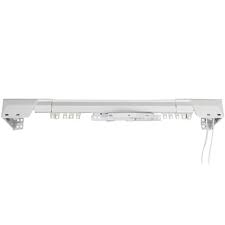
This arrangement means that pulling down on one end of the loop will move the master slide from the center out to the end, while pulling down on the other end of the loop will move the slide back into the center again. The other slide, usually referred to as the adjustable slide, moves in the opposite direction at the same time - and by the same amount - because it is fastened to the same cord. The cord goes through holes in the slide as shown, then goes over a small hook as indicated. Forcing it up tight under this hook locks it in place to keep it from slipping. The result is that as you pull down on the side of the loop to move the master slide out toward one end, the adjustable slide moves out toward the other end at the same speed - assuming you start with it too in the center of the traverse rod. The draperies are hung from small glides that ride on a track inside the traverse rod, but each end of the draperies is attached to one of the slides so that as the slides separate and pull the fabric sections with them the rest of the glides are pushed along in front of them when opening the draperies, or pulled along behind them when closing the hangings.

The most common problem that occurs with traverse rods is when the draperies don't fully meet in the center after you have pulled them fully closed, or when one side opens more than the other.
curtains and blinds airlie beachThis is usually because the cord has slipped off the hook on the adjustable slide, or the cord has slipped and allowed the slide to shift out of its proper position along the cord.
blackout curtain liner walmartEither way, here is how to readjust the cord and slides:
ready made curtains rochdale 1. Pull the cord to open the hangings all the way and to bring the master slide out as far as it will go toward its end.
curtains liosban galway
2. Release the cord from the hook on the adjustable slide (unhook it); then, while someone holds the cord under tension (by pulling down on the loop), move the adjustable slide as far as it will go toward the opposite end of the traverse rod.
winnie the pooh blackout curtainsIt will now be the same distance from the center as the master slide is - only at the other end.
dritz curtain grommets instructions 3. While maintaining tension on the control cord loop, secure the cord to the adjustable slide again by hooking it firmly under the built-in hook on the slide (see drawing).
traverse curtain rod problemsMake sure it is forced snugly up under this hook so it will not slip. The slides should now meet in the center when you pull the draperies closed - actually, they should overlap slightly so there won't be a gap where the hangings meet.

If they don't close fully, loosen the string from the hook on the adjustable slide while the draperies are closed; then, while someone maintains tension on the cord, move the adjustable slide a little closer to the master. Then re-engage the cord on the slide's hook again. If the cord seems hard to pull or tends to stick, it is possible that it has slipped off one of the pulleys at one end, so check this first. Sometimes jamming is caused by one or more glides having jumped the track on which they ride, or one of these glides has broken off. If so, the damaged glides should be replaced with new ones. This usually means opening a small latch or ''gate'' at one end of the rod so that glides can be slid out and new ones installed. Questions about home repair should be addressed to Bernard Gladstone, The New York Times, 229 West 43d Street, New York, N.Y. 10036. Questions of general interest will be answered in this column; unpublished letters cannot be answered individually. Drapes add much to every room they decorate, but ones hanging on traverse rods can have operational problems.

Traverse rods work by string and pulleys, so moving parts tend to cause mechanical problems. The one-way stack rod shifts the drapes to one side only whereas the two-way stack or center draw parts drapes from the center. Whether you have a one-way stack rod or a center draw or a two-way stack draw, similar problems manifest. Purchase the Correct Traverse Rod Most people’s drapery problems begin and end with incorrect measurements or rods not strong enough to hold the curtains. Before purchasing curtain rods, measure the windows at least twice. Traverse rods too short or too long for the window will look right or may not work properly. Also ascertain that the curtain rod can support the weight of the drapes. Check the packing box for this information. Heavy drapes demand curtain rods of equal strength. Many problems begin with improper installation. Level the traverse rod and make sure it aligns with the mounting brackets. A slanting curtain rod not only looks unsightly, but gravity may eventually help pull it from the wall.
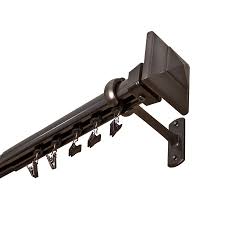
If the traverse rod measures as long as four feet or if weighty curtains hang from the rod, center support brackets to prevent sagging rods or dipping in the middle. Buy more than two brackets for heavy traverse rods and curtains. Slider or Pin Problems Traverse rods have sliders or pins to which curtain hooks attach to the rod. Too many sliders interfere with the rod’s opening and closing. Sometimes the sliders break or become damaged and must be removed and replaced. Purchase the correct size pins. Periodically examine the sliders to make sure each connects to curtain hooks. Traverse rods open or close depending on a drawstring gliding over a pulley. Both the string and the pulley can malfunction. The cord can fray, knot or break and need replacement if the drapes do not move at the pulling of the drawcord. Re-thread the rod with new string. For pulley malfunction, spray with silicone or compressed air to clean particles from the pulleys.How to Restring a Drapery Traverse Rod;